Terranigma
The God Who Built the World
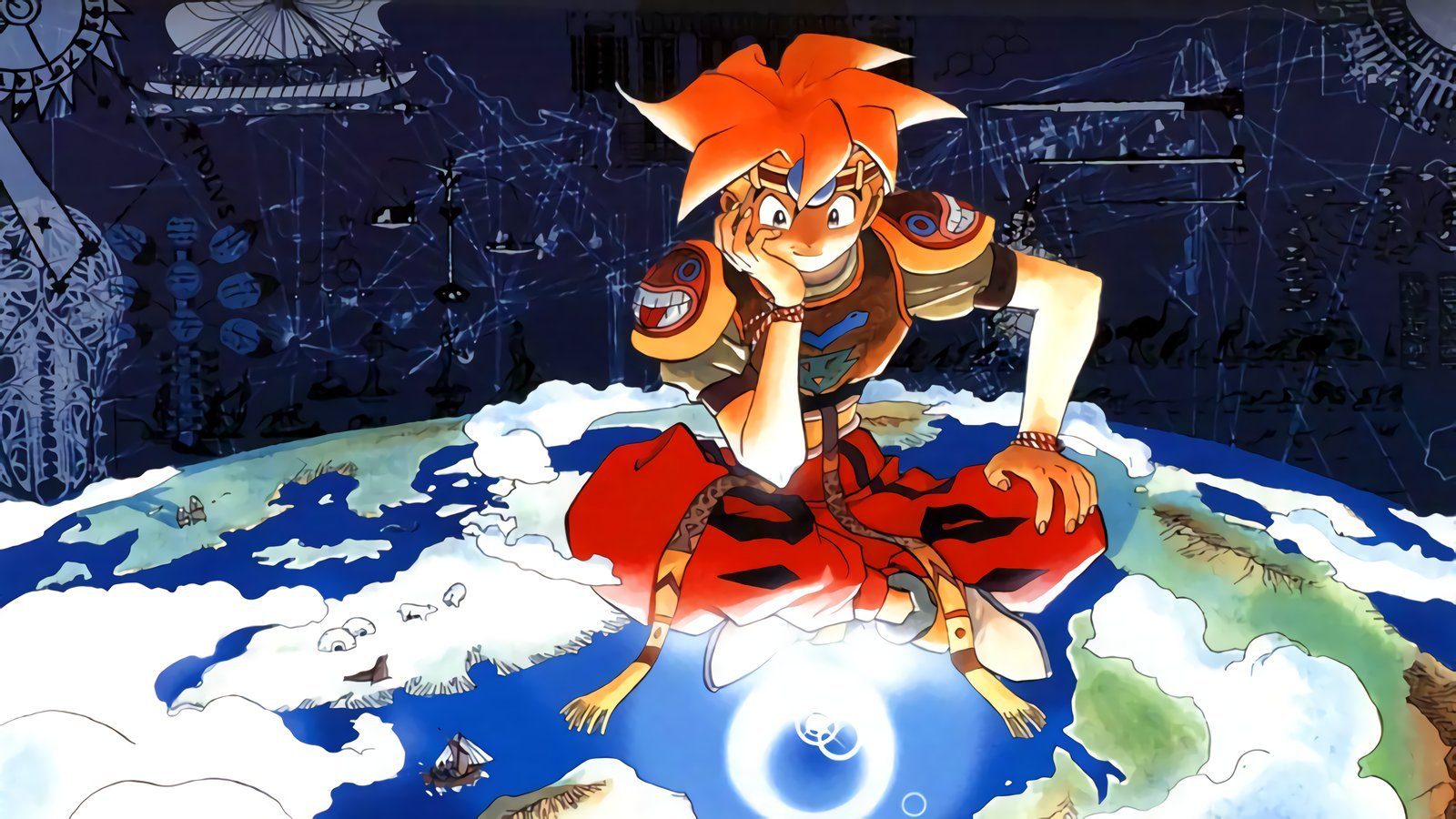
There is a moment early in Terranigma — perhaps twenty minutes in, before you have had time to settle into its rhythms — when the game asks for something games rarely ask at all, then or now. It asks you to resurrect a continent. Not conquer it. Not explore it. Resurrect it. You press the action button over a dark, frozen landmass, and the earth exhales. Flora erupts. Rivers find their courses. The world wakes up. And you understand, almost immediately, that you are not here to save the world in the usual sense. You are here to make it. That shift — from hero as conqueror to participant in the making and burden of a world — changes the emotional texture of everything that follows.
It is the kind of moment that reframes the whole game. Developed by Quintet and published by Enix for the Super Famicom in 1995, Terranigma received European and Australian releases — translated into English, German, French, and Spanish — but missed a North American launch because Enix had already closed its US publishing arm by the time localisation was done. The translation existed. The game was ready. There was simply no one left to release it. For years it circulated mainly through import culture, emulation, and word of mouth. Those who found it said: find this game. It will do something to you.
They were not wrong. Playing it today — via original cartridge, fan translation, or accurate emulation — is to encounter something that still feels structurally rare. The player character, Ark, is not the chosen one in any comforting sense. He is an instrument of forces whose agenda he only gradually comprehends, and the story’s treatment of creation, duality, and sacrifice belongs less to genre convention than to a particular strain of fiction that makes restoration feel morally complicated. In Japan the game was known as Tenchi Sōzō — The Creation of Heaven and Earth — a title that makes the ambition explicit from the outset.
The Release That Never Happened
The men who built it had been thinking about the entire life cycle of a planet for years before they found a way to make it. Quintet was founded in 1989 by Tomoyoshi Miyazaki and Masaya Hashimoto, formerly at Nihon Falcom, and Miyazaki has described an original plan for their first game — an RPG depicting “the entire life cycle of a planet,” abandoned as unreasonable for a four-megabyte cartridge. The discarded concept waited five years and became Terranigma instead — realised not because the technology had caught up, but because Miyazaki had found the shape his idea needed to take.
The Game That Keeps Changing What It Is
The structure is unusual enough that it is worth describing plainly. Terranigma keeps changing what kind of adventure it is. First you resurrect continents. Then you shepherd the evolution of animal life across them. Then — in the game’s most audacious section — you enter a recognisable human history and watch civilisation build itself around you. Towns develop. Technologies appear. Characters you helped into existence live, age, and die. What still surprises is not just the size of the journey but the way the game makes time visible: the world moves forward whether or not you are paying attention, and your role in it shifts from creator to witness to something harder to name.
The combat holds up because it is built around movement rather than menu. Ark’s spear attacks have unusual reach and momentum — he covers ground, he commits, he can be punished for greed. The dungeons are brisk without being thin, each one distinct enough to feel designed rather than procedural. And the pacing, unusual as it is for an action RPG of this length, sustains momentum because it keeps changing the terms: you are rarely doing the same kind of thing for long. The melancholy that accumulates across it is wholly earned, because the game earns it mechanically as well as narratively. Every restoration comes with a cost that the systems make you feel.
None of it would land half as hard without the score. Composed primarily by Miyoko Takaoka and Masanori Hikichi, it is one of the SNES’s great underheard soundtracks — equally capable of aching quietude and genuine grandeur. Yuzo Koshiro, the composer behind ActRaiser and the Streets of Rage series, contributed music for the game’s laboratory area and went entirely uncredited — his fingerprints are there if you know where to listen, a particular brightness in the orchestration that feels slightly set apart from the rest.
The Director Who Vanished
Quintet has been silent since the early 2000s, and its founder Tomoyoshi Miyazaki has — according to character designer Kamui Fujiwara — simply disappeared from public life. Fujiwara has speculated that this is precisely why republication remains legally unclear. In 2021, a fan petition backed publicly by Fujiwara and co-composer Miyoko Takaoka renewed the conversation without resolving it. The same year, Square Enix released ActRaiser Renaissance, suggesting they have access to at least some of the library. Whether Terranigma is included, or whether Miyazaki’s absence keeps it unreachable, remains unanswered.
Its afterlife has been as strange as the game itself. But the legend matters less than the fact that Terranigma still plays with uncommon force.
What stops it from being merely a curiosity is precisely that it works as a game. The case is not archival. The structure still feels rare in 2026 — most action RPGs still reward the player for defeating, collecting, and clearing; Terranigma rewards them for the stranger, slower work of making something exist that did not exist before, and for learning what that cost looks like when the credits finally roll. Players used to games that treat atmosphere and agency as genuinely moral questions — Hollow Knight, more overtly philosophical RPGs — may be surprised by how far Terranigma had already pushed in that direction.
It does not feel like archaeology. It feels alive — which is, after all, precisely the point.
- Terranigma — 1995 Developer Interviews shmuplations.com (Miyazaki, Takebayashi, Fujiwara)
- Quintet Developer Interviews 1993–1997 shmuplations.com (Miyazaki on ActRaiser's abandoned concept)
- Quintet Spotlight: Introduction Post Game Content
- Terranigma — Hardcore Gaming 101 Hardcore Gaming 101
- Terranigma review — RPGFan RPGFan
- Terranigma review — Nintendo Life Nintendo Life